
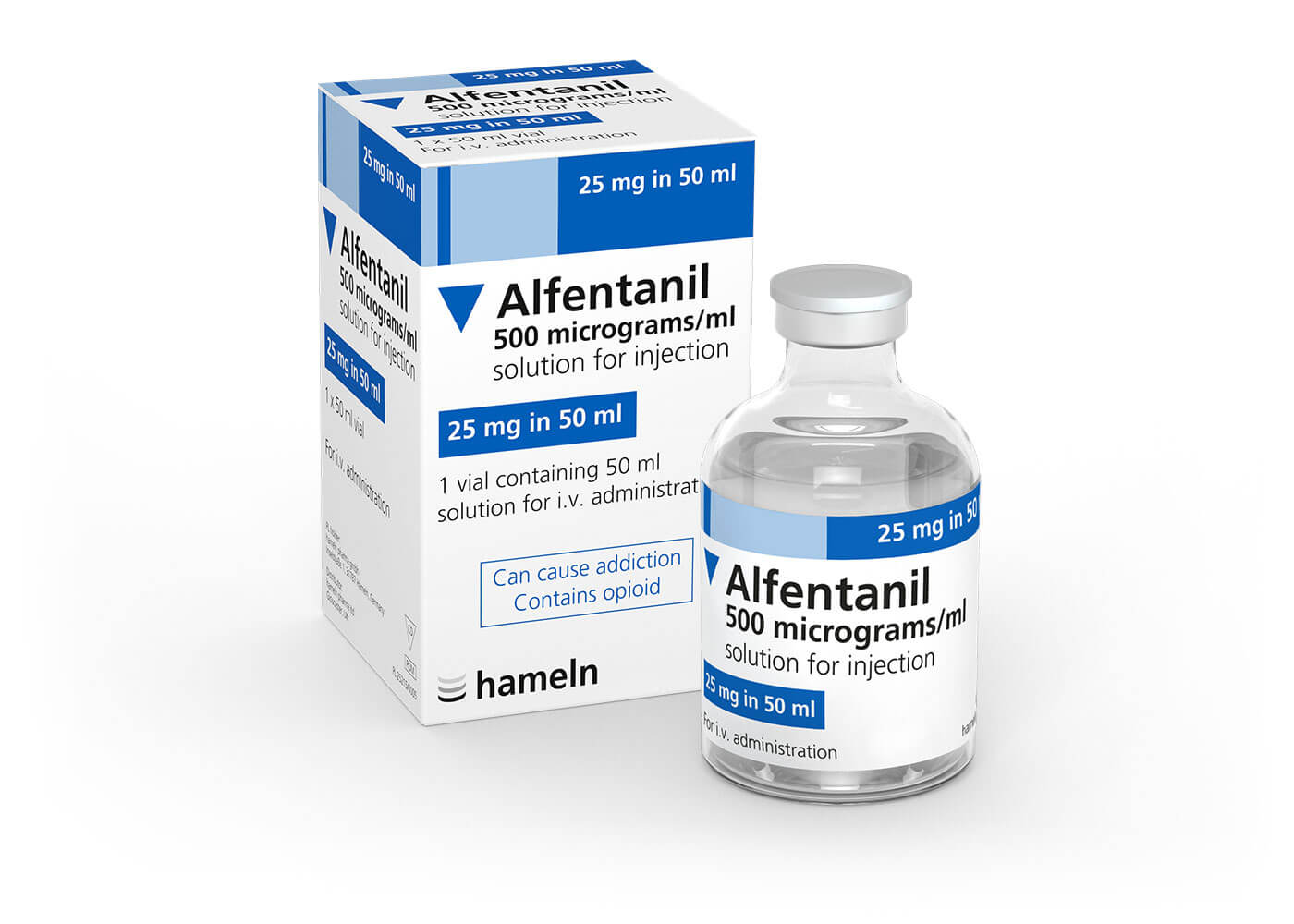
Alfentanil | 25mg in 50Ml
€150.00
What Is Alfentanil?
Alfentanil is a synthetic opioid, meaning — unlike morphine, codeine, or the semi-synthetic drugs derived from them — it’s created entirely through chemical synthesis rather than being derived from the opium poppy. It belongs to the same chemical family as fentanyl and is, in fact, a fentanyl analog, developed specifically to have an even faster onset and shorter duration of action.
Alfentanil: What It Is and How It’s Used
Unlike most of the opioids covered in this series, alfentanil isn’t something you’ll find on an outpatient prescription pad. It’s a fully synthetic opioid used almost exclusively in operating rooms and other closely monitored medical settings, valued for how quickly it takes effect and how quickly it wears off. Here’s a complete look at what alfentanil is, how it compares to other opioids, and what makes it clinically distinct.
What Is Alfentanil?
Alfentanil is a synthetic opioid, meaning — unlike morphine, codeine, or the semi-synthetic drugs derived from them — it’s created entirely through chemical synthesis rather than being derived from the opium poppy. It belongs to the same chemical family as fentanyl and is, in fact, a fentanyl analog, developed specifically to have an even faster onset and shorter duration of action.
Like other opioids, alfentanil works by binding to mu-opioid receptors in the brain and spinal cord, blocking pain signal transmission. What sets it apart clinically isn’t its mechanism, but its speed: alfentanil takes effect within about 1–2 minutes when given intravenously, and its effects wear off much faster than morphine or fentanyl, making it useful for situations where rapid, brief, tightly controlled opioid activity is needed.
How Alfentanil Compares in Potency
Alfentanil is a potent opioid, though it’s actually somewhat less potent than fentanyl itself — generally considered to be roughly one-fourth to one-tenth as potent as fentanyl, depending on the specific comparison. Despite being less potent than fentanyl, it remains dramatically more potent than morphine, generally estimated at somewhere around 10 to 25 times stronger than morphine on a milligram basis, again depending on the source and clinical context.
What makes alfentanil clinically distinct isn’t primarily its potency ranking among synthetic opioids — it’s its pharmacokinetic profile: a very rapid onset combined with a notably short duration of action compared to fentanyl. This combination of strength and speed is why it occupies a specific niche in anesthesia rather than being used more broadly.
Why Alfentanil Is Used Almost Exclusively in Surgical Settings
Alfentanil’s rapid onset and short duration make it particularly well-suited to procedures where:
- Precise, moment-to-moment control over opioid effect is needed, such as during the induction of anesthesia or brief, painful procedural moments within a longer surgery.
- A quick recovery from opioid effects is desirable, such as outpatient or same-day surgical procedures where a patient needs to regain alertness relatively soon after the procedure ends.
- Continuous infusion with tight titratability is useful, since alfentanil’s short duration allows anesthesiologists to adjust the depth of opioid effect quickly by changing an infusion rate, rather than waiting out a longer-acting drug’s effects.
Because of this narrow, specific clinical role, alfentanil is administered only by anesthesiologists or other clinicians trained in its use, virtually always in a hospital or surgical center setting with continuous monitoring of breathing, heart rate, and oxygen levels.
How Alfentanil Is Administered
Alfentanil is given intravenously, either as:
- A single bolus dose, for a short procedure or a specific brief painful moment during a longer one.
- A continuous IV infusion, for ongoing opioid effect throughout a longer procedure, allowing the anesthesia team to adjust the rate as needed based on the patient’s response and the stage of surgery.
It is not available in oral tablets, patches, or other outpatient formulations, which is a meaningful difference from most other opioids covered in this series and reflects its narrow surgical role.
Side Effects
Alfentanil’s side effect profile is consistent with other potent opioids, with some effects that are particularly relevant in a surgical context:
Common effects:
- Drowsiness and sedation, expected and often intentional in an anesthesia context
- Nausea and vomiting, particularly as anesthesia wears off
- Muscle rigidity, notably chest wall rigidity, which can occur with rapid administration of potent synthetic opioids like alfentanil and can interfere with ventilation if not anticipated and managed
- Dizziness or lightheadedness
- Itching
More serious risks:
- Respiratory depression — slowed or stopped breathing, a significant and expected risk requiring the continuous monitoring and airway management standard in surgical settings
- Bradycardia (slowed heart rate)
- Low blood pressure
Because alfentanil is used exclusively in closely monitored settings with immediate access to airway support and reversal agents, these risks are actively anticipated and managed by the clinical team as a routine part of anesthesia care, rather than something a patient monitors for independently, as would be the case with an outpatient opioid prescription.
Who Requires Extra Caution With Alfentanil
Given its potency and surgical use, certain patient factors are particularly relevant for the anesthesia team to consider:
- People with significant respiratory or cardiac conditions, given alfentanil’s effects on breathing and heart rate.
- Older adults, who may require dose adjustments given differences in drug metabolism and clearance.
- People with liver impairment, since alfentanil is metabolized by the liver and impaired function can affect how the drug is cleared.
- Patients on other sedating medications or opioids, since combined effects can increase the risk of respiratory depression during and after a procedure.
- Pregnant individuals, where opioid use during procedures is weighed carefully alongside the needs of the surgery or delivery itself.
These considerations are part of standard pre-anesthesia evaluation, which is why anesthesiologists review a patient’s full medical history and current medications before any procedure involving alfentanil or similar drugs.
Alfentanil vs. Fentanyl vs. Morphine: A Quick Comparison
| Alfentanil | Fentanyl | Morphine | |
|---|---|---|---|
| Type | Fully synthetic | Fully synthetic | Naturally occurring |
| Relative potency vs. morphine | ~10–25x stronger | ~50–100x stronger | Baseline |
| Onset (IV) | ~1–2 minutes | ~2–5 minutes | Several minutes |
| Duration | Short | Moderate | Longer |
| Typical setting | Surgical/anesthesia only | Surgical, ICU, and some outpatient forms (e.g., patches, lozenges) | Broad — hospital, cancer care, hospice, some outpatient use |
| Outpatient availability | None | Limited (specific formulations) | Yes |
This comparison highlights alfentanil’s specific niche: it’s neither the most potent nor the most commonly used synthetic opioid, but its unusually fast onset and short duration make it the preferred choice for particular moments within anesthesia care where those specific properties matter most.
Dependence and Regulatory Status
Alfentanil is a Schedule II controlled substance, reflecting its high potential for misuse and dependence, consistent with other potent opioids. In practice, because it’s used only in controlled clinical settings under direct medical supervision — rather than dispensed for patients to take independently — its practical risk profile in terms of everyday misuse differs meaningfully from opioids that are sent home with patients. That said, diversion and misuse of surgical opioids by healthcare workers with clinical access is a recognized concern within medicine, and hospitals maintain strict controlled substance tracking protocols in part to address this risk.
Alfentanil’s Place in the Fentanyl Family
Alfentanil belongs to a small family of synthetic opioids chemically related to fentanyl, developed over the decades since fentanyl itself was first introduced, each engineered with slightly different onset speeds, durations, and potencies to suit different clinical needs. Understanding where alfentanil sits within this family helps clarify why anesthesiologists choose one over another for a given procedure rather than defaulting to the same drug every time:
- Fentanyl — the original of this family, used in a wide range of settings from surgery to cancer pain management, available in multiple formulations including patches and lozenges for specific outpatient uses.
- Alfentanil — developed for an even faster onset and shorter duration than fentanyl, suited to precise, brief opioid control during procedures.
- Sufentanil — significantly more potent than fentanyl, used in some surgical and obstetric settings for its own specific pharmacokinetic profile.
- Remifentanil — distinguished by an extremely short duration due to a unique metabolic pathway that allows for very rapid clearance, making it useful for continuous infusions where quick recovery immediately after stopping the infusion is important.
Each of these exists because different surgical and procedural scenarios call for different combinations of potency, onset, and duration — alfentanil’s particular niche is the combination of very fast onset with a comparatively short duration, useful for brief, intensely painful moments within a longer procedure or for short outpatient surgeries where fast recovery matters.
History and Development | how to buy alfentanil online
Alfentanil was developed in the early 1980s as part of ongoing efforts within anesthesiology to create synthetic opioids with more precisely controllable pharmacokinetic profiles than the naturally occurring and semi-synthetic opioids available at the time. Its faster onset and shorter duration compared to fentanyl, which had itself been introduced roughly two decades earlier, represented a meaningful step forward for anesthesia practice, particularly as outpatient and shorter surgical procedures became more common and the need for opioids that allowed quick recovery grew alongside them.
Since its introduction, alfentanil has remained a standard tool in anesthesiology, though its specific use has evolved alongside the development of related drugs like remifentanil, which offers an even more rapid clearance profile for certain applications. Anesthesiologists today typically choose among this family of drugs based on the specific demands of a given procedure — its expected length, whether rapid recovery is a priority, and the patient’s individual health factors — rather than any one drug serving as a universal default.
Frequently Asked Questions
Will I be prescribed alfentanil to take home? No. Alfentanil is used exclusively in surgical and closely monitored clinical settings, administered intravenously by trained clinicians. It isn’t available as an outpatient prescription in any form.
Is alfentanil the same as fentanyl? No, though they’re closely related — alfentanil is a fentanyl analog with a faster onset and shorter duration, but it’s somewhat less potent than fentanyl itself.
Why is alfentanil used instead of other opioids during surgery? Its rapid onset and short duration allow anesthesiologists to precisely control opioid effect throughout a procedure and support faster recovery afterward, which is particularly valuable for shorter or outpatient procedures.
What is chest wall rigidity, and is it dangerous? It’s a known effect that can occur with rapid administration of potent synthetic opioids like alfentanil, where chest and airway muscles stiffen and can interfere with breathing. Anesthesia teams anticipate and manage this as a routine part of using these medications, including through administration technique and, if needed, specific medications to address it.
Is alfentanil more dangerous than other opioids? Its potency and rapid onset require the specialized monitoring and expertise available in a surgical setting, which is exactly why it’s restricted to that context. Used appropriately by trained clinicians with proper monitoring, it’s a well-established and routinely used part of modern anesthesia care.
Where can i buy alfentanil online
Alfentanil is a fast-acting, potent synthetic opioid used almost exclusively in surgical and anesthesia settings, valued for how quickly it takes effect and how quickly its effects resolve. Its role is narrow and specific by design — it’s not an opioid patients take home or manage independently, and its risks are addressed through the continuous monitoring and clinical expertise standard in the settings where it’s used. Its story is also a useful window into how differently opioids can be used across medicine: the same broad drug class that includes take-home tablets for chronic pain also includes highly specialized, minutes-long infusions administered exclusively by anesthesia specialists and tailored to the precise demands of a single procedure. If you’re having a procedure that may involve alfentanil, your anesthesia team will review your medical history and any relevant risk factors as a routine part of your pre-procedure evaluation, and it’s always reasonable to ask what medications are planned for your specific procedure if you’d like to understand your care better.
Be the first to review “Alfentanil | 25mg in 50Ml”
Related products
Opioid Products
Opioid Products

Opioid Products
Opioid Products
Opioid Products

Opioid Products
Opioid Products

Opioid Products
Reviews
There are no reviews yet.